Invoicing··9 min read
What to Include in an Invoice to Get Paid Faster
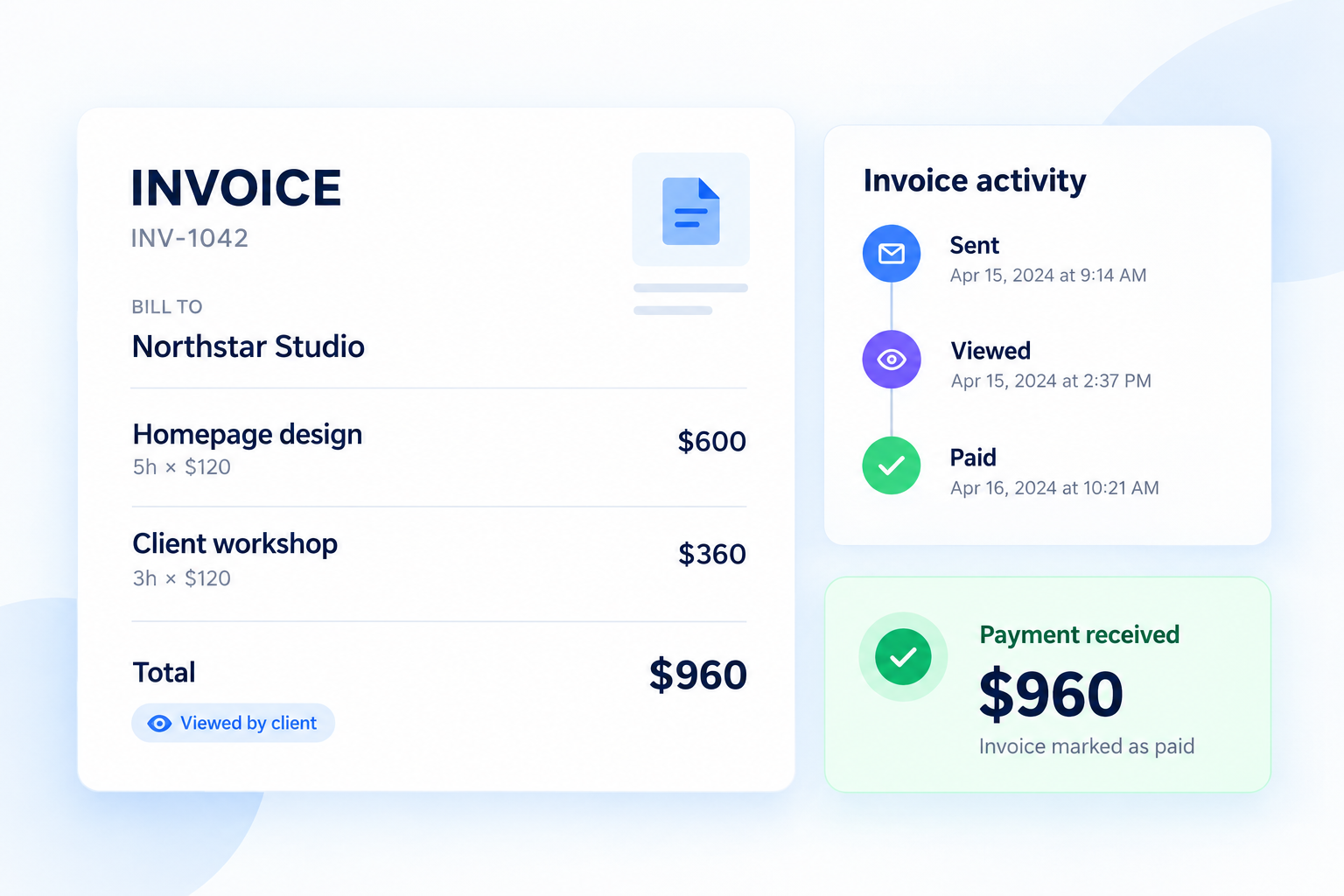
Late payments are not always about difficult clients. Often, a few missing invoice details create avoidable delays. Here is a clear freelance invoice checklist to help you get paid faster.
Late payments are frustrating, but they are not always caused by bad clients or awkward money conversations. In many cases, the delay starts with the invoice itself. If a client has to email you to ask what the work covered, who to pay, when it is due, or which purchase order to reference, your invoice has created extra admin for someone on their side. The easier your invoice is to review, approve, and send to accounts payable, the faster you usually get paid.
This guide breaks down exactly what to include in an invoice, why each detail matters, and how to invoice clients in a way that reduces confusion. Think of it as a practical freelance invoice checklist, not a legal lecture. The goal is simple: make payment the easy next step.
Why clear invoices get paid faster
When freelancers think about invoicing, they often focus on the amount due. Clients, however, often see something else first: whether the invoice fits their internal process. A project manager may need to confirm deliverables. A finance person may need a billing address, payment terms, or tax details. A larger company may require a purchase order number or a named contact. If any of that is missing, your invoice can sit in limbo even if the client fully intends to pay.
This is why invoice best practices matter. A good invoice answers questions before anyone has to ask them. It shows what was done, when it was done, how much is owed, how to pay, and what happens next. It also creates a useful paper trail if a payment goes overdue later. If you are already dealing with payment delays, Tired of chasing clients for payment? covers the follow-up side of the problem. This article focuses on preventing the delay in the first place.
A fast-paid invoice is usually one that requires no explanation.
The essential details every freelance invoice should include
If you only want the core answer to what to include in an invoice, start here. Every invoice should contain a few basics that make it valid, easy to understand, and easy to process.
- Your business name or your full name, exactly as the client knows you
- Your contact details, such as email and mailing address if relevant
- The client or company name and the correct billing contact
- A unique invoice number
- The invoice date
- The payment due date, not just vague terms
- A clear description of the work delivered
- The subtotal, taxes if applicable, and total amount due
- Your accepted payment methods and payment instructions
- Any required tax ID, VAT number, or business registration details if applicable
These details sound obvious, but even experienced freelancers skip some of them. A common example is writing "Net 14" without including the actual due date. Another is sending an invoice to the person who hired you rather than the finance contact who can actually process it. If you want to tighten your whole admin flow, How to Create a Freelance Workflow That Saves Time Every Week can help you make invoicing part of a consistent routine.
What to write in the line items so clients can approve quickly
The line items are often where approvals slow down. This is especially true when the work is creative, strategic, or ongoing. "Design work" or "Marketing support" may make sense to you, but it may be too vague for a client who needs to match your invoice to a budget, retainer, or project milestone.
A better approach is to describe the work in a way that connects directly to the agreement. For example, instead of "Writing services," you could say "Website copywriting for 5 core pages, as approved in proposal dated May 3." Instead of "Consulting," you could say "June strategy retainer covering weekly planning calls, campaign review, and reporting."
If you bill hourly, include the rate and number of hours. If you bill by project, mention the milestone or deliverable. If you charge a retainer, note the service period. This is one of the simplest ways to improve how to invoice clients without changing your pricing at all.
- For hourly work: list hours, rate, and date range
- For project work: list deliverable, milestone, or agreed scope
- For retainers: list the month or service period covered
- For expenses: list each item separately and attach receipts if needed
- For deposits: clearly label them as a deposit or upfront payment
This matters even more if you track time across multiple tasks. If your billing is based on hours, make sure those hours are easy to support. How to Track Freelance Hours Without Interrupting Your Flow is useful if your timesheets are currently scattered across notes, timers, and memory.
Payment terms that remove friction instead of adding it
An invoice should not make clients guess how or when to pay. Clear payment terms are one of the most overlooked parts of a freelance invoice checklist. They are also one of the easiest to improve.
Start with the due date. Use a calendar date such as "Due July 18, 2026" rather than relying only on "Net 15." Then include exactly how the client can pay you: bank transfer, card, ACH, PayPal, or another method. If payment by bank transfer is preferred, include the full details they need. If you accept multiple methods, list them in order of preference.
You can also include short, professional notes such as a late fee policy if that is already part of your contract. Just keep it calm and factual. The invoice is not the place to introduce new terms the client never agreed to.
- State the exact due date
- List accepted payment methods
- Include all payment details needed to complete the transfer
- Reference any agreed deposit, installment plan, or late fee policy
- Add a purchase order number if the client requires one
If you work with US clients, the Internal Revenue Service has guidance on business recordkeeping that is worth following for your own files: IRS recordkeeping. For UK freelancers, HMRC also provides practical guidance on invoicing and business records: HMRC invoices and records. Even when rules vary by country, the basic principle is the same: keep your invoices complete and consistent.
Small details that prevent avoidable delays
Beyond the essentials, there are a few details that often make the difference between an invoice that gets paid this week and one that sits in a queue. These details are especially important if you work with agencies, larger companies, or clients with finance teams.
- Use the client's legal or billing name, not just the brand name they use casually.
- Send the invoice to the right person and copy anyone who needs visibility.
- Reference the project name, statement of work, or proposal if relevant.
- Include the purchase order number if they asked for one.
- Match your invoice amount to the agreed quote, milestone, or approved change request.
- Attach supporting documents only when useful, such as receipts or a timesheet summary.
- Name the file clearly, for example Invoice-024-StudioName-July-2026.pdf.
Freelancers often lose time here because the project details were fuzzy from the start. If your invoice is hard to explain, there is a chance your scope or proposal was too loose earlier in the process. Scope creep usually starts with a vague proposal is a helpful follow-on read if invoice confusion keeps pointing back to unclear project agreements.
A simple freelance invoice checklist before you hit send
Before sending any invoice, take one minute to check it against this list. This is the version of invoice best practices that protects you from the most common delays.
- Is the invoice addressed to the correct company and billing contact?
- Does it have a unique invoice number and invoice date?
- Is the due date shown clearly?
- Do the line items describe the work in plain language?
- Does the total match the agreed pricing, scope, or milestone?
- Are taxes, discounts, deposits, or expenses shown clearly?
- Have you included payment instructions the client can use immediately?
- Did you add any required purchase order or reference number?
- Is the file named clearly and attached in the requested format?
- Did you send it to the right email address or portal?
If this checklist feels repetitive, that is actually a good sign. Fast invoicing is usually boring, repeatable admin. The more you standardize it, the fewer mistakes you make. If you want less of your week eaten by tasks like this, Freelance admin is eating your billable week shows where small systems can save real time.
How to make invoicing easier on your side too
Getting paid faster is not only about the client experience. It also depends on whether you can send invoices promptly and consistently. If you wait until the end of the month to piece together hours, expenses, and project notes, delays begin before the client even sees the invoice.
A smoother setup usually looks like this: track time as you work, keep project scope documented, turn approved work into line items, and send invoices on a regular schedule. When those pieces live together, you spend less energy reconstructing what happened. If you want a simple place to handle that process, Invoices can help without adding a heavy system to your workflow.
The bigger point is this: a good invoice is not just a document. It is the final step in a clear project process. When your proposal, scope, time tracking, and invoice all match, clients have fewer reasons to pause payment.
If you remember nothing else, remember this freelance invoice checklist in one line: identify the work, identify the amount, identify the due date, and make payment easy. That is what to include in an invoice if you want fewer follow-up emails and a better chance of getting paid on time. Clear invoices do not guarantee perfect clients, but they remove a surprising number of avoidable delays.
Put this workflow into practice
Rebban connects proposals, projects, time tracking, invoices, and payment reminders—so less work falls between tools.
Start free trial