Proposals··9 min read
How to Write a Freelance Proposal That Wins Better Clients
A strong freelance proposal does not need to be long or flashy. It needs to make the client feel understood, reduce uncertainty, and show a clear path forward.
Most clients do not say yes because a proposal looks impressive. They say yes because it makes the decision feel safe. A good freelance proposal tells a client, in plain language, that you understand the problem, know what you will deliver, and have a sensible process for getting there. That is what wins better clients. Not a 12 page PDF. Not clever design. Not generic promises.
If you have ever spent hours writing a proposal only to hear nothing back, the issue is often not your skill. It is clarity. Many freelancers try to prove value by adding more words, more services, and more polish. But strong proposals are usually shorter, sharper, and more specific. They answer the questions a serious client is already asking: Do you get what I need? What exactly am I buying? How much will it cost? What happens next?
In this guide, you will learn how to write a freelance proposal that helps good clients feel confident saying yes, while also protecting your time, your scope, and your cash flow.
What a winning freelance proposal actually does
A freelance proposal is not just a price quote. It is a decision document. The client is using it to compare options, spot risk, and imagine what working with you will feel like. That means your proposal needs to do more than describe services. It needs to reduce uncertainty.
The best proposals usually do five things well:
- They reflect the client’s real problem, not just the service they asked for
- They define scope clearly so both sides know what is included
- They connect your work to an outcome the client cares about
- They present pricing in a way that feels understandable and fair
- They make the next step easy
This matters because vague proposals often create problems later. If your deliverables, timeline, or revision limits are fuzzy, scope creep starts early. If you want a deeper look at that pattern, read Scope creep usually starts with a vague proposal.
A proposal wins when it replaces doubt with confidence.
Start with the client’s situation, not your biography
One of the most common mistakes in a freelance proposal is opening with a long introduction about yourself. Clients usually care less about your story than freelancers think. They care about whether you understand what is going on in their business.
A stronger opening sounds more like this: Here is what I understand about the project, here is the challenge, and here is the result we are aiming for. That simple shift changes the proposal from self-focused to client-focused.
For example, imagine a freelance copywriter responding to a SaaS client. A weak proposal opening might say: "I am a passionate copywriter with five years of experience creating compelling content." A stronger opening might say: "You need a clearer homepage and onboarding emails so trial users understand your product faster and more of them convert to paid plans." The second version shows context, priority, and commercial awareness.
This does not mean you should hide your experience. It means your credibility should support the client’s needs, not compete with them. Add a short section with relevant examples, results, or similar projects after you have shown you understand the brief.
If you want your admin process to feel lighter while still looking professional, it helps to keep proposal writing simple and structured. That is part of the thinking behind tools like Proposals, and also why some freelancers prefer simpler systems over all-in-one platforms with heavy setup. HoneyBook and Bonsai are powerful. Rebban is simpler on purpose.
Be specific about deliverables, timeline, and boundaries
Specificity is persuasive because it makes the work feel real. A client is far more likely to approve a proposal that names deliverables clearly than one that uses broad phrases like "branding support" or "marketing help."
Instead of writing "website copy," write "copy for homepage, about page, services page, and contact page, with two rounds of revisions." Instead of writing "social media management," write "12 Instagram captions, content scheduling, and monthly reporting."
Your timeline should also be concrete. State estimated start date, key milestones, what you need from the client, and what may affect delivery. Better clients usually appreciate this because it signals reliability. It also helps you avoid awkward situations later when a project stalls because feedback or assets arrive late.
Boundaries matter just as much as deliverables. Include what is not included. That can feel uncomfortable at first, but it protects both sides. For example, if the proposal covers design concepts but not development, say so. If extra revision rounds are billed separately, say so. If meetings beyond a set amount are additional, say so.
Freelancers often lose unpaid time in fuzzy project work. Clear proposals reduce that risk before the project even begins. You can see the broader impact in The billable hours you never invoice.
Price for clarity, not surprise
Pricing is where many proposals become either too vague or too defensive. Better clients do not expect the cheapest number. They expect a price they can understand.
When possible, attach the price to a defined scope and result. A flat project fee often works better than a loose estimate because it helps the client see what they are buying. If you offer options, keep them simple. For example, you might present a core package, a standard package, and a more comprehensive package. The goal is not to create a confusing menu. The goal is to help the client choose the level of support that fits.
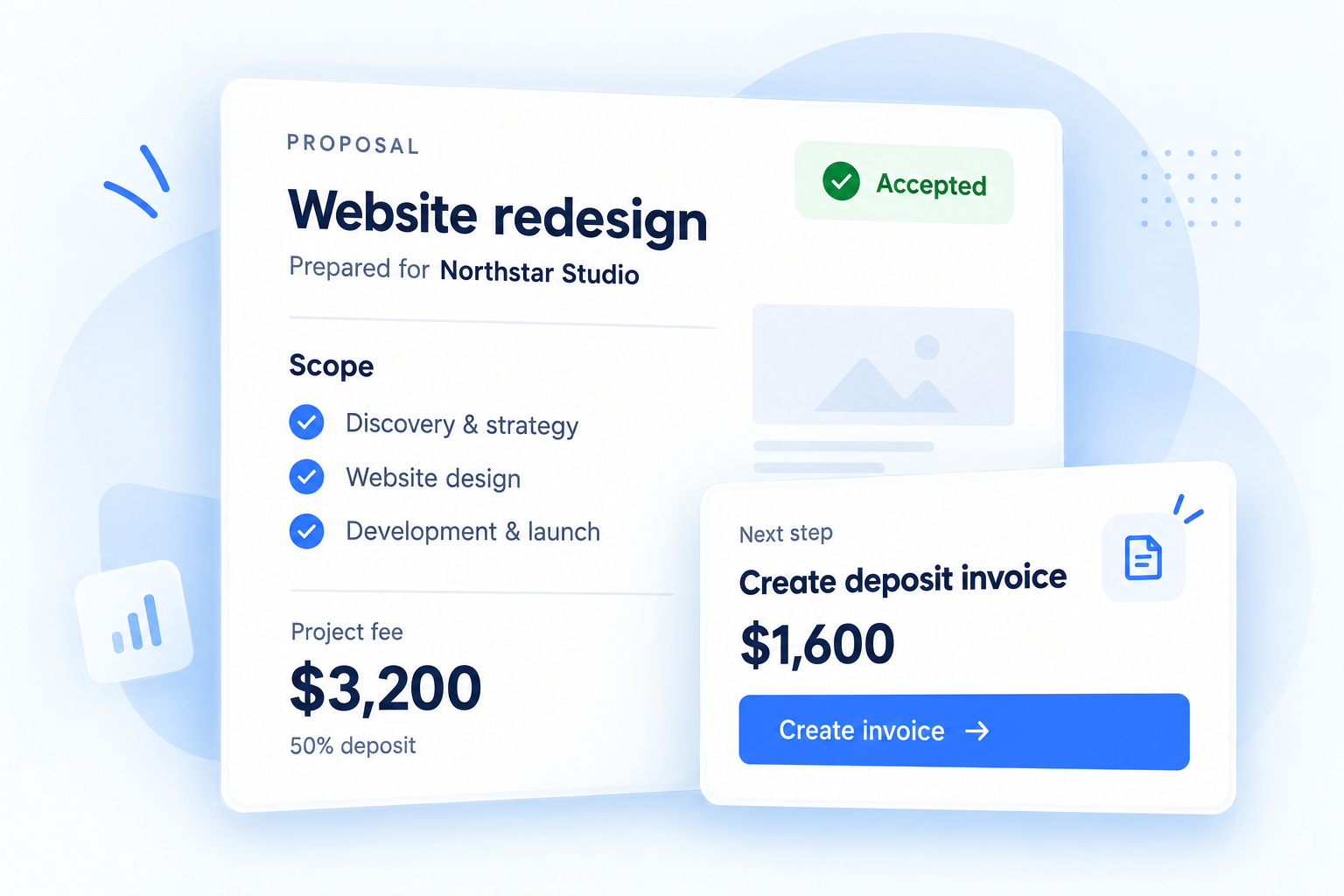
It also helps to explain payment terms clearly. State deposit amount, remaining payment schedule, due dates, and when work begins. This is not just a finance detail. It affects trust. According to the U.S. Small Business Administration, clear written agreements are an important part of reducing misunderstandings in business relationships: sba.gov.
A simple pricing section in a freelance proposal might include:
- Project fee
- What is included
- Deposit required to book
- Remaining balance schedule
- Rate for additional work outside scope
This is also where your proposal connects to invoicing. If payment terms are unclear at proposal stage, collections often get harder later. Tired of chasing clients for payment? covers what happens when this part gets skipped.
A simple freelance proposal template you can adapt
If you are wondering how to write a freelance proposal without starting from a blank page every time, use a repeatable structure. A good freelance proposal template saves time and helps you stay consistent without sounding robotic.
- Project summary - A short recap of the client’s goals, challenges, and desired outcome.
- Proposed solution - What you recommend and why this approach fits the project.
- Scope of work - Clear list of deliverables, platforms, formats, and revision limits.
- Timeline - Start date, milestones, feedback windows, and final delivery timing.
- Investment - Project fee, deposit, payment schedule, and any optional add-ons.
- About you - Brief proof of fit, relevant experience, or selected examples.
- Next steps - How to approve, sign, pay deposit, and start.
This structure works for many freelance services, including design, writing, consulting, development, photography, and marketing. The wording will change, but the logic stays the same: understand the problem, propose a plan, define the work, explain the cost, and show what happens next.
If you manage proposals, projects, time, and invoices across too many tools, keeping this process consistent can get messy fast. When client work lives in five apps, something always slips explains why that happens.
Proposal tips for freelancers who want better clients
Winning better clients is not just about writing better documents. It is about signaling how you work. Serious clients often notice small details that less experienced freelancers overlook.
- Send the proposal while the conversation is still fresh. Waiting a week can cool momentum.
- Use the client’s language where possible. Mirror their priorities without copying their words mechanically.
- Keep it skimmable. Use headings, short paragraphs, and lists so busy people can absorb it quickly.
- Avoid jargon and inflated claims. Clear beats impressive.
- Do not promise outcomes you cannot control. Promise process, quality, and scope you can stand behind.
- Include an expiry date if your pricing or availability may change.
- Make approval easy with a simple call to action.
There is also value in qualifying who you write proposals for. Not every inquiry deserves a custom document. If a prospect has no budget range, unclear goals, or keeps pushing for free strategy before committing, a long proposal will not fix that. Sometimes the best proposal tip for freelancers is to protect your time before the proposal stage even begins.
For a broader look at where freelance time disappears behind the scenes, Freelance admin is eating your billable week is worth reading.
If you want a practical benchmark for agreements and expectations in independent work, the National Association for the Self-Employed is another useful resource: nase.org.
Make it easy to say yes
A strong freelance proposal does not overwhelm the client with information. It organizes the right information so the client can make a confident decision. That is the real job. If your proposal clearly reflects the problem, names the deliverables, sets boundaries, explains pricing, and shows the next step, you are already ahead of many freelancers.
The goal is not to sound bigger than you are. It is to sound clear, prepared, and trustworthy. Better clients respond well to that because they are not looking for flash. They are looking for confidence.
So before you send your next freelance proposal, ask one simple question: if I were the client, would this make the work feel easier to buy? If the answer is yes, you are probably much closer to a signed project.
Put this workflow into practice
Rebban connects proposals, projects, time tracking, invoices, and payment reminders—so less work falls between tools.
Start free trial